Rs 3,147 cr highway project set to transform connectivity in C’garh
Date :23-Apr-2026
Staff Reporter
:
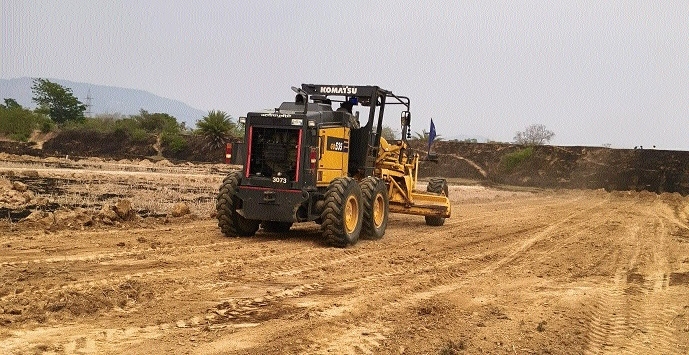
The foundation stone laid by Prime Minister Narendra Modi on the occasion of Chhattisgarh’s Silver Jubilee has now transitioned into significant ground-level construction. The National Highways Authority of India has commenced work on a massive project valued at Rs 3,147 cr, covering the stretch from Patthalgaon and Kunkuri to the Chhattisgarh-Jharkhand border on National Highway 43.
This segment represents a vital part of the larger Raipur-Dhanbad Economic Corridor, which spans a total of six hundred and twenty-seven kilometers. Chhattisgarh holds the majority share of this corridor, with nearly sixty-one per cent of the total length, approximately
three hundred and eighty-four kilometers, lying within the state borders. The current phase of construction focuses on a one hundred and four kilometer section that is set to redefine the region’s transport landscape.
To ensure a seamless and safe travel experience, the project includes the development of three hundred and eighty-two major and minor structures along the Patthalgaon-Jharkhand border route. This extensive list of infrastructure includes seven major bridges and thirty minor bridges, alongside six flyovers and an elevated viaduct structure. Furthermore, the plan incorporates ten vehicular underpasses and eighteen light vehicular underpasses to manage traffic flow effectively. To accommodate local needs and rural safety, twenty-six small vehicular underpasses and twenty-one cattle and pedestrian underpasses are being integrated into the design.
The drainage and structural stability of the highway will be supported by two hundred and seventy-eight box culverts and eleven other specialized structures.
DD Parlawar, the Project Director of the Korba Project Unit, has identified this section as the backbone of the entire Raipur-Dhanbad Corridor. He noted that the primary objective is to complete the work within the pre-determined timeframe to bolster inter-state connectivity and commercial transportation. For the Jashpur district, this corridor is expected to be a lifeline rather than just a road. It is designed to unify key towns such as Patthalgaon, Kansabel, Kunkuri, Duldula, and Jashpur into a high-speed network. By linking major industrial centers like Raipur, Bilaspur, Raigarh, and Korba directly to Dhanbad in Jharkhand, the highway will facilitate much easier trade and logistics for the entire eastern belt of India.
The benefits of this project extend beyond simple travel, offering fast and safe connectivity that will lead to significant reductions in fuel consumption, travel duration, and overall transportation costs. It is specifically designed to serve the critical industrial needs of the region, connecting coal mines and major steel plants across Korba, Raigarh, Jashpur, Ranchi, and Jamshedpur. The National Highways Authority of India anticipates that the smoother traffic flow will simultaneously reduce road accidents and environmental pollution.
As goods and minerals are transported more efficiently, the local economy is expected to see a significant boost, creating new business opportunities and employment for communities living along the corridor.
n Staff Reporter
RAIPUR, Apr 22
The foundation stone laid by Prime Minister Narendra Modi on the occasion of Chhattisgarh’s Silver Jubilee has now transitioned into significant ground-level construction. The National Highways Authority of India has commenced work on a massive project valued at Rs 3,147 cr, covering the stretch from Patthalgaon and Kunkuri to the Chhattisgarh-Jharkhand border on National Highway 43.
This segment represents a vital part of the larger Raipur-Dhanbad Economic Corridor, which spans a total of six hundred and twenty-seven kilometers. Chhattisgarh holds the majority share of this corridor, with nearly sixty-one per cent of the total length, approximately
three hundred and eighty-four kilometers, lying within the state borders. The current phase of construction focuses on a one hundred and four kilometer section that is set to redefine the region’s transport landscape.
To ensure a seamless and safe travel experience, the project includes the development of three hundred and eighty-two major and minor structures along the Patthalgaon-Jharkhand border route.
This extensive list of infrastructure includes seven major bridges and thirty minor bridges, alongside six flyovers and an elevated viaduct structure. Furthermore, the plan incorporates ten vehicular underpasses and eighteen light vehicular underpasses to manage traffic flow effectively. To accommodate local needs and rural safety, twenty-six small vehicular underpasses and twenty-one cattle and pedestrian underpasses are being integrated into the design. The drainage and structural stability of the highway will be supported by two hundred and seventy-eight box culverts and eleven other specialized structures.
DD Parlawar, the Project Director of the Korba Project Unit, has identified this section as the backbone of the entire Raipur-Dhanbad Corridor. He noted that the primary objective is to complete the work within the pre-determined timeframe to bolster inter-state connectivity and commercial transportation. For the Jashpur district, this corridor is expected to be a lifeline rather than just a road. It is designed to unify key towns such as Patthalgaon, Kansabel, Kunkuri, Duldula, and Jashpur into a high-speed network. By linking major industrial centers like Raipur, Bilaspur, Raigarh, and Korba directly to Dhanbad in Jharkhand, the highway will facilitate much easier trade and logistics for the entire eastern belt of India.
The benefits of this project extend beyond simple travel, offering fast and safe connectivity that will lead to significant reductions in fuel consumption, travel duration, and overall transportation costs. It is specifically designed to serve the critical industrial needs of the region, connecting coal mines and major steel plants across Korba, Raigarh, Jashpur, Ranchi, and Jamshedpur. The National Highways Authority of India anticipates that the smoother traffic flow will simultaneously reduce road accidents and environmental pollution. As goods and minerals are transported more efficiently, the local economy is expected to see a significant boost, creating new business opportunities and employment for communities living along the corridor.