Co-ordinated efforts for holistic development may soon turn Kinhiraja into a model village
| Date :26-Apr-2026 |
Our Correspondent :
KINHIRAJA, an adopted village in Malegaon taluka, is rapidly progressing towards becoming a model of holistic rural development with District Collector Yogesh Kumbhejakar stressing the need for strong coordination among all departments. He stated that a balanced approach to water conservation, agriculture, employment generation, tourism, and women empowerment would enable the village to emerge as an ideal model for the district.
The initiative is being implemented under the Mahatma Gandhi National Rural Employment Guarantee Scheme (MGNREGS), and since January 12, 2026, the pace of development has significantly accelerated. Various departments are working together to implement projects across key sectors including irrigation, livestock, infrastructure, and livelihood generation.
A major thrust has been given to water conservation and infrastructure development.
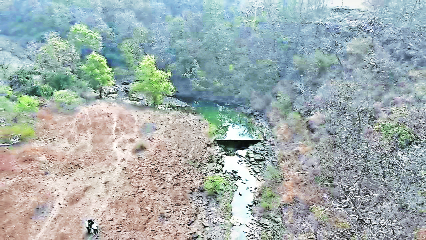
Field inspections of both large and small lakes, along with desilting work of around 1,400 metres of drainage channels, have been undertaken. Engineers from the Water Conservation Department and Zilla Parishad have assessed water storage capacity and repair needs, and proposals have been submitted accordingly. In collaboration with the Naam Foundation, water and soil conservation works at temple lakes such as Hanuman Mandir and Kamleshwar Mandir have also been reviewed
and reported.
In the agriculture sector, efforts are being made to promote sustainability. Feasibility studies for farm ponds are underway, and farmers are being guided on organic and natural farming as well as
agricultural mechanisation. Training sessions, demonstrations, and farmers’ meets are being organised while special workshops for horticulture development are also planned.
The Animal Husbandry Department has organised ‘Pashu Sanjeevani’ camps, providing treatment and deworming for livestock. Plans are in place to ensure 100 per cent vaccination, increase milk production, and organise infertility treatment camps. Efforts are also ongoing to connect farmers with regional dairy development projects.
Tourism development is being pursued as an important growth avenue. The Forest Department is preparing a comprehensive plan around the Katepurna Wildlife Sanctuary region which includes development of Pandavleni Hill, improvement works at Mahadev Kund, parking facilities, and adventure activities such as ziplining. Proposals have also been initiated to improve connectivity with the Samruddhi Expressway.
Women empowerment and employment generation are key priorities. Under the UMED campaign, self-help groups are being trained in small-scale enterprises such as papad and spice production, tailoring, beauty services, and grocery businesses.
Producer groups and village organisations are also being formed, with additional support from the Women’s Economic Development Corporation.
Other departments are contributing actively to the initiative. The Sports Department has submitted proposals for open gyms, indoor fitness centres, and running tracks. The Labour Department has started registration of construction workers, while the Social Welfare Department is implementing schemes for Dalit settlements, including infrastructure development and individual benefit programmes. Tribal development initiatives are also being carried out to provide basic facilities and welfare support in tribal areas.
In the education sector, school development plans and quality improvement measures are being implemented.
The Fisheries Department has been directed to prepare a plan to promote fishery activities in the village, while the Rural Development and Panchayat departments have been instructed to propose additional works under MGNREGS.
Additionally, a proposal has been submitted to HDFC Bank under its Corporate Social Responsibility initiative for a grant of Rs 5 lakh to establish a Dr Babasaheb Ambedkar Study Centre and a competitive examination guidance centre, aimed at enhancing educational opportunities for local youth.
Under the guidance of the District Collector, implementation of these initiatives is progressing steadily. Although a few reports are still pending, the development blueprint for Kinhiraja is taking clear shape, with strong expectations that the village will soon emerge as a model of integrated and sustainable rural development.